
Wurzelbehandlung bei 25-facher Vergrößerung
Wurzelbehandlung in Sopron, unter dem Mikroskop
Eine Wurzelkanalbehandlung rettet einen stark zerstörten, entzündeten oder verletzten Zahn, statt ihn zu entfernen. Das entzündete Nervgewebe und die Blutgefäße im Inneren des Zahns werden ausgeräumt, die Kanäle desinfiziert und bis zur Wurzelspitze verschlossen, danach wird der Zahn wieder aufgebaut. Bei Harajda Dent in Sopron geschieht der gesamte Eingriff unter dem Dentalmikroskop bei 25-facher Vergrößerung.
Oder rufen Sie an+36 (99) 50 60 90
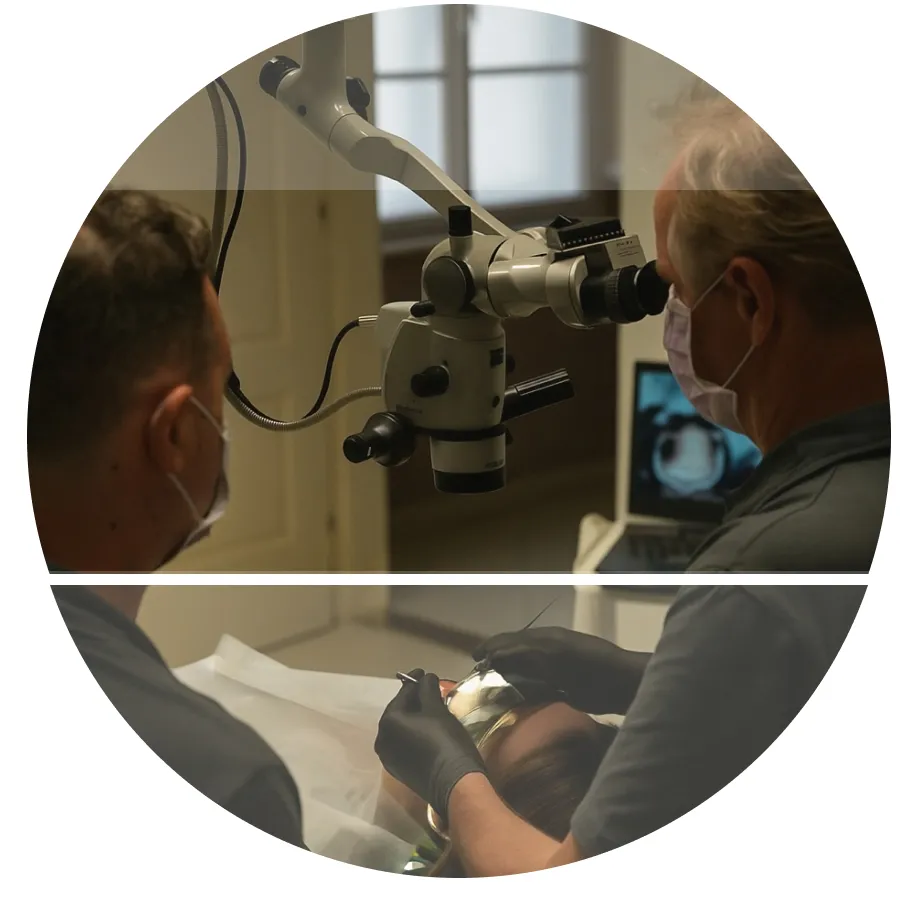
Wurzelkanalbehandlung unter dem Operationsmikroskop
- Umfang
- Erstbehandlung
- Methode
- 25× Mikroskop, abgeschirmt
- Betäubung
- Örtlich
- Sitzungen
- Je nach Zahn
- Ab
- €500
Das Instrument
Wodurch wir sehen
Der Zahn, der behandelt wird, erscheint fünfundzwanzigfach vergrößert. Das macht es möglich, Kanäle zu öffnen, die für das bloße Auge unsichtbar sind, sie durch eine kleinere Öffnung im Zahn zu erreichen und Veränderungen in seinem Inneren zu erkennen, die weder das Auge noch das Röntgenbild zeigt.

Das Operationsmikroskop im Behandlungszimmer 
Arbeit unter Vergrößerung, bei abgeschirmtem Arbeitsfeld
Der Unterschied im Blick
Derselbe Zahn in drei Vergrößerungen
Das meiste einer Wurzelbehandlung spielt sich in einem Raum ab, der kleiner ist als ein Reiskorn. Diese Illustrationen zeigen, warum die Vergrößerung darüber entscheidet, was gefunden und behandelt werden kann.

1×
Bloßes Auge

8×
Lupenbrille
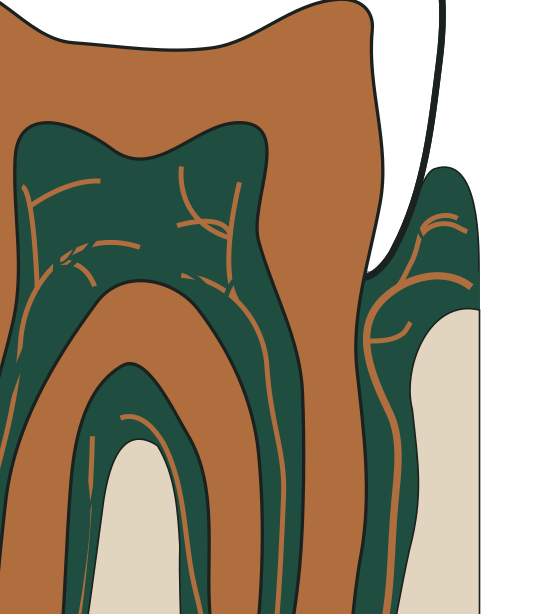
25×
Operationsmikroskop
Stilisierte anatomische Illustrationen, keine klinischen Fotografien. Querschnittsgrafik: DBCLS, CC BY 4.0.
Was Vergrößerung an einer Wurzelbehandlung ändert
Der Sinn der Ausstattung ist nicht die Ausstattung. Er liegt darin, dass ein Zahn, der sonst zu einem Teil nach Gefühl behandelt würde, unter Sicht behandelt wird, und das verändert, was in seinem Inneren gefunden werden kann.
Kanäle, die sonst unsichtbar bleiben
Fünfundzwanzigfach vergrößert öffnen sich Kanäle, die mit bloßem Auge nicht zu sehen sind und die in manchen Fällen auch auf dem Röntgenbild nicht auftauchen. Ein übersehener Kanal bleibt infiziert, und das ist der häufigste Grund, warum eine Wurzelbehandlung scheitert. Derselbe scharfe Blick zeigt feine Risse und Karies, die sich unter eine alte Füllung schiebt, solange beides noch klein genug für eine schonende Behandlung ist.
Weniger gesunder Zahn geht verloren
Bei vergrößerter Sicht genügt eine kleinere Öffnung, um den Kanal zu erreichen, und mehr von der gesunden Substanz ringsum bleibt stehen. Was von Ihrem Zahn übrig ist, muss den Wiederaufbau die nächsten Jahrzehnte tragen.
Ein Verschluss, der bis zur Wurzelspitze reicht
Sobald der Kanal sauber ist, wird er auf seiner ganzen Länge mit einem Material gefüllt, das dicht an der Kanalwand abschließt. Eine Wurzelfüllung, die vorher endet, lässt Raum für Bakterien, und genau dieses Versagen soll diese Arbeitsweise verhindern.
Ein besser planbarer Termin
Nach dem zu arbeiten, was sichtbar ist, statt nach dem, was zu erwarten wäre, macht die Behandlung sicherer und meist auch zügiger, weil weniger ertastet werden muss.
Wenn eine frühere Behandlung nicht gehalten hat
Ein anderswo behandelter Zahn, der nie zur Ruhe gekommen ist, lässt sich häufig wieder öffnen, erneut reinigen und neu verschließen. Das ist ein anderer Eingriff als eine erste Wurzelbehandlung, und die Seite zur Revision beschreibt, was dazugehört.
Eine Wurzelbehandlung ist meist nötig, wenn
- ein Zahn auf heiß oder kalt empfindlich reagiert und empfindlich bleibt, nachdem der Reiz weg ist
- es pocht oder sich beim Zubeißen gespannt und unangenehm anfühlt
- Karies die Pulpa erreicht hat, also Nerv und Blutgefäße im Inneren des Zahns
- ein Zahn bei einem Unfall beschädigt wurde oder der Nerv beim Vorbereiten einer Füllung freilag
- der Nerv im Zahn abgestorben ist und das Röntgenbild Veränderungen an der Wurzelspitze zeigt
Der Termin
Wie die Behandlung durchgeführt wird
Der folgende Ablauf ist das eigene Protokoll dieser Klinik für mikroskopgestützte Endodontie. Wie viele Termine er braucht, hängt vom Zahn ab: Ein Schneidezahn mit einem Kanal und ein Backenzahn mit vieren sind nicht dieselbe Arbeit, und welcher Fall vorliegt, sagen wir Ihnen nach der Untersuchung.
- 01
Untersuchung und Beratung
Der Zahn wird untersucht und die Aufnahmen werden durchgesehen, die Ihr Fall braucht, damit Zahl und Verlauf der Kanäle sowie jede frühere Behandlung bekannt sind, bevor etwas beginnt.
- 02
Örtliche Betäubung
Der Zahn und das umliegende Gewebe werden örtlich betäubt. Der Ruf der Wurzelbehandlung stammt weitgehend daher, wie sie vor Jahrzehnten durchgeführt wurde; bei ordentlicher Betäubung sollte der Termin selbst nicht schmerzhaft sein.
- 03
Den Zahn abschirmen
Der Zahn wird mit einer eigenen Vorrichtung vom übrigen Mund abgeschirmt, damit Speichel und Bakterien nicht in den Behandlungsbereich gelangen. Den Kanal sauber zu halten, solange er offen ist, zählt genauso wie die mechanische Reinigung selbst.
- 04
Zugang und Auffinden der Kanäle
Im Zahn wird eine kleine Öffnung angelegt und die Kanäle werden unter dem Mikroskop aufgesucht. Weil der Blick vergrößert ist, kann diese Öffnung kleiner ausfallen als sonst nötig, und mehr von Ihrem Zahn bleibt unversehrt.
- 05
Messen, reinigen, desinfizieren
Jeder Kanal wird auf seine volle Arbeitslänge vermessen und dann über die gesamte Länge gründlich gereinigt und desinfiziert, einschließlich der unregelmäßigen Anatomie, die die Vergrößerung sichtbar macht.
- 06
Verschluss bis zur Wurzelspitze
Die Kanäle werden bis zur Spitze der Wurzel mit einem Material gefüllt, das dicht an der Kanalwand abschließt, sodass Bakterien nicht erneut hindurchwandern können. Die anfangs angelegte Öffnung wird anschließend mit einer Füllung verschlossen.
- 07
Den Zahn wieder aufbauen
Ein wurzelbehandelter Zahn lebt nicht mehr: Er ist schwächer, bricht leichter und verliert mit der Zeit seine natürliche Farbe. Je nachdem, wie viel gesunder Zahn übrig ist, wird er mit zahnfarbenem Füllungsmaterial aufgebaut, mit einem Stift in der Wurzel, der den Aufbau trägt, oder mit einer Krone, sobald der Zahn mindestens drei Monate beschwerdefrei war.
Kommt ein behandelter Zahn nicht zur Ruhe, wird zuerst geprüft, ob er sich durch die Krone hindurch und ohne Operation erneut öffnen und behandeln lässt, worum es auf der Seite zur Revision geht. Wo das nicht möglich ist, können die Wurzelspitze und das entzündete Gewebe darum herum stattdessen chirurgisch entfernt werden.
Mikroskop oder konventionell
Zwei Wege, denselben Zahn zu behandeln
Beide Verfahren reinigen und verschließen die Kanäle in der Wurzel. Der Unterschied liegt darin, wie viel von diesem System dabei tatsächlich zu sehen ist.
Wonach gearbeitet wird
- Unter dem Mikroskop
- Nach dem Zahn bei 25-facher Vergrößerung, ausgeleuchtet und scharf
- Konventionell, nach Augenmaß
- Nach dem, was das bloße Auge und das Röntgenbild hergeben
Verborgene oder untypische Kanäle
- Unter dem Mikroskop
- Lassen sich auffinden und öffnen
- Konventionell, nach Augenmaß
- Können übersehen werden, die übliche Ursache einer gescheiterten Wurzelbehandlung
Zugangsöffnung
- Unter dem Mikroskop
- Kleiner, weil der Kanal durch weniger Zahn erreichbar ist
- Konventionell, nach Augenmaß
- Größer, damit das Auge eine Arbeitssicht bekommt
Feine Risse und beginnende Karies
- Unter dem Mikroskop
- Sichtbar, solange sie klein sind
- Konventionell, nach Augenmaß
- Oft erst auffällig, wenn sie sich ausgebreitet haben
Der endgültige Verschluss
- Unter dem Mikroskop
- Bei 25-facher Vergrößerung über die volle Arbeitslänge jedes Kanals in Augenschein genommen
- Konventionell, nach Augenmaß
- Vor allem nach dem danach angefertigten Röntgenbild beurteilt
So zu arbeiten ist in dieser Klinik der Standard für jede Wurzelbehandlung und keine Zusatzleistung, zwischen der Sie wählen oder für die Sie zusätzlich zahlen müssten.
Kosten und Preise
Was eine Wurzelbehandlung hier kostet
Eine Wurzelbehandlung wird pro Zahn beziffert und nicht pro Mund, weil genau das schwankt: Ein Frontzahn mit einem Kanal und ein Backenzahn mit vieren sind unterschiedlich viel Arbeit.
Was den Preis bestimmt
- Um welchen Zahn es geht
- Schneidezähne, Prämolaren und Backenzähne haben unterschiedlich viele Kanäle und eine unterschiedliche Anatomie, die zu bewältigen ist.
- Wie viele Termine nötig sind
- Manche Zähne werden in einer Sitzung gereinigt und verschlossen. Wo es die Entzündung verlangt, wird der Kanal zwischenversorgt und noch einmal beurteilt, bevor der endgültige Verschluss kommt, und das bedeutet einen zweiten Termin.
- Wie der Zahn danach aufgebaut wird
- Ein zahnfarbener Aufbau, ein Stift in der Wurzel und eine Krone sind getrennte Schritte mit getrennten Kosten, entschieden danach, wie viel gesunder Zahn übrig ist.
- Bildgebung
- Die diagnostischen Aufnahmen, die Ihr Fall braucht, sind Teil des Plans, für den Sie einen Kostenpunkt bekommen.
So erhalten Sie einen Kostenplan
- 01Kostenlose ErstberatungDie persönliche Untersuchung in der Klinik kostet Sie nichts. Wir sehen uns den Zahn an, nehmen die Aufnahmen, die Ihr Fall braucht, und erklären Ihnen, was die einzelnen Möglichkeiten tatsächlich bedeuten.
- 02Heil- und Kostenplan, bevor etwas vereinbart wirdSie erhalten einen Kostenplan für Ihren eigenen Mund, für die Materialien Ihres Falls und für die Zahl der Sitzungen, die er braucht. Kein Durchschnittswert aus einer Tabelle, der auf Sie vielleicht gar nicht zutrifft.
- 03Sie entscheiden danachNach der Beratung besteht keinerlei Verpflichtung, eine Behandlung zu vereinbaren. Wenn Sie Praxen vergleichen, nehmen Sie den Plan mit nach Hause.
Die meisten unserer Patientinnen und Patienten kommen aus Österreich und Deutschland. Nach der Erfahrung dieser Klinik liegt eine Behandlung hier im Schnitt 15 bis 20 Prozent unter einer vergleichbaren Privatbehandlung in Österreich. Ihr eigener Betrag hängt von Ihrem Behandlungsplan ab, und Sie haben ihn schriftlich, bevor ein Termin vereinbart wird.
Die Zahlen auf dieser Seite und in der Preisliste sind Richtwerte und zeigen, ab welchem Betrag eine Behandlung beginnt. Ihr eigener Betrag stammt aus Ihrer Untersuchung und wird Ihnen schriftlich gegeben, bevor ein Termin vereinbart wird. Die Untersuchung ist kostenlos.
Fragen zur Wurzelkanalbehandlung
Tut eine Wurzelkanalbehandlung weh?
Die Behandlung wird unter örtlicher Betäubung durchgeführt, der Termin selbst sollte also nicht schmerzhaft sein. Der Ruf, den Wurzelbehandlungen mit sich tragen, stammt größtenteils daher, wie sie vor Jahrzehnten gemacht wurden. Weh tut in der Regel der entzündete Zahn vor der Behandlung. Eine gewisse Druckempfindlichkeit beim Zubeißen über einige Tage danach ist normal; sagen Sie uns Bescheid, wenn sie nicht nachlässt.
Wie viele Termine braucht eine Wurzelbehandlung?
Das hängt vom Zahn ab und davon, was wir in seinem Inneren vorfinden. Ein Frontzahn mit einem Kanal und ein Backenzahn mit vieren sind nicht vergleichbar, und wo sich die Entzündung erst beruhigen muss, wird der Kanal zwischenversorgt und noch einmal beurteilt, bevor er verschlossen wird. Wie viele Sitzungen Ihr Zahn braucht, sagen wir Ihnen nach der Untersuchung, bevor Sie sich festlegen.
Meine Wurzelbehandlung wurde anderswo gemacht und ist nicht zur Ruhe gekommen. Kann man das wiederholen?
Häufig ja, es ist aber ein anderer Eingriff als eine erste Wurzelbehandlung. Einen behandelten Zahn wieder zu öffnen, das alte Füllmaterial auszuräumen und erneut zu verschließen, heißt Revision, und dazu gibt es auf dieser Seite eine eigene Seite mit dem Ablauf, den Kosten und der Frage, wie die Heilung danach kontrolliert wird.
Wie lange hält ein wurzelbehandelter Zahn?
Eine einzelne Zahl gibt es nicht, weil es davon abhängt, wie gründlich das Kanalsystem gereinigt und verschlossen wurde und womit der Zahn danach aufgebaut worden ist. Was das Leben eines wurzelbehandelten Zahns am häufigsten verkürzt, ist ein Bruch und nicht eine erneute Infektion, und deshalb zählt der Aufbau ebenso viel wie die Wurzelfüllung. Behalten Sie ihn bei Ihren regelmäßigen Kontrollen im Auge.
Brauche ich nach der Wurzelbehandlung eine Krone?
Manchmal. Ein wurzelbehandelter Zahn lebt nicht mehr: Er ist schwächer, bricht leichter und verliert nach und nach seine natürliche Farbe. Ist genug gesunder Zahn übrig, kann ein Aufbau mit zahnfarbenem Füllungsmaterial genügen; wenn nicht, kommt eine Krone, sobald der Zahn mindestens drei Monate beschwerdefrei war. Was auf Sie zutrifft, erfahren Sie im Behandlungsplan, denn es verändert sowohl die Zahl der Termine als auch die Kosten.
Lohnt sich die Anreise aus Österreich für eine Wurzelbehandlung?
Sopron liegt rund 70 Kilometer von Wien entfernt, und der gesamte Termin lässt sich auf Deutsch abwickeln. Der Grund, warum Patientinnen und Patienten gerade hierher fahren, ist das Mikroskop: Wenn ein Zahn es wert ist, erhalten zu werden, ist er es wert, mit sichtbaren statt ertasteten Kanälen behandelt zu werden. Sagen Sie bei der Terminanfrage, dass Sie anreisen, denn ein Zahn, der eine zweite Sitzung braucht, wird besser um Ihre Fahrt herum geplant als in sie hineingedrückt.
Nächster Schritt
Finden Sie heraus, ob der Zahn zu retten ist.
Die persönliche Untersuchung kostet nichts. Wir sehen uns den Zahn an, sagen Ihnen, ob eine Wurzelbehandlung ihn hält und was dazugehören würde, und Sie entscheiden danach.
Oder rufen Sie die Klinik an+36 (99) 50 60 90