
Conservative care
Restorative dentistry: fillings, inlays and hygiene
Restorative dentistry, also called conservative dentistry, is the work that keeps your own teeth: professional cleaning, tooth-coloured fillings, and laboratory-made inlays, onlays and overlays where decay has gone too far for a filling. Bigger rebuilds are done under the microscope, and impressions are taken with a small scanner rather than a tray of putty.
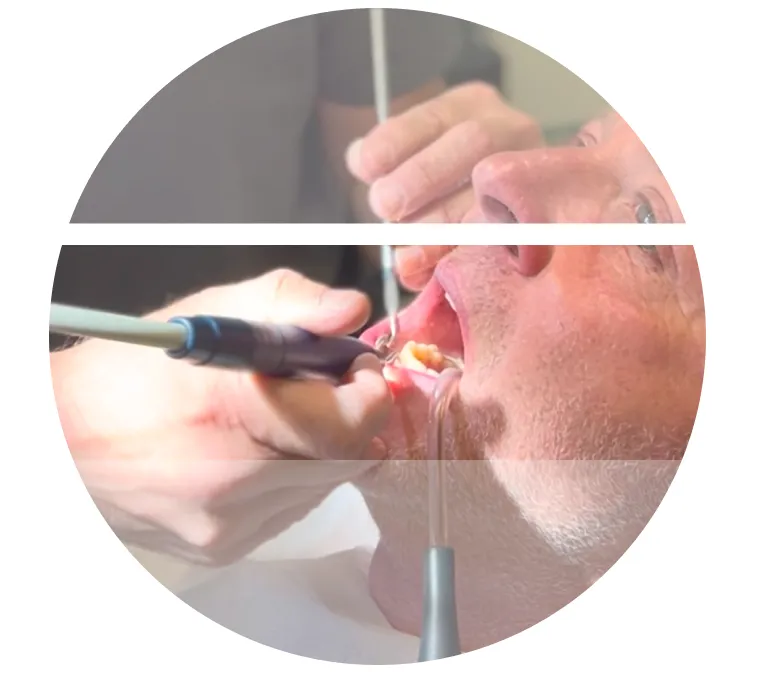
Conservative treatment, tooth by tooth
- Covers
- Hygiene, fillings, inlays
- Method
- Tooth-coloured, adhesive
- Visits
- 1 filling · 2 inlay
- Impressions
- Intraoral scanner
- From
- €40
Keeping the tooth you already have
Conservative dentistry is unglamorous and it is where most of the value is: it costs less, removes less and lasts longer than anything that replaces a tooth. The cheapest implant is the one you never need.
Tooth-coloured fillings
Where decay has damaged a tooth, or a small piece has broken away, the decayed tissue is removed and the gap rebuilt with tooth-coloured filling material. Modern white fillings are matched to the shade of your own tooth so closely that the repair does not show.
Inlays, onlays and overlays
An inlay is a filling made in a dental laboratory and then bonded into the tooth, used where too much of the tooth is gone for a filling shaped in the mouth. An onlay is the same thing covering the chewing surface as well, and an overlay covers almost the whole tooth. All three fit more precisely and last longer than a very large filling.
Rebuilding a badly damaged tooth in one visit
A tooth that has lost a lot of substance can often be built back up at magnification rather than ground down for a crown. The work is finished in one appointment, hairline cracks and decay hiding under the old filling are visible while it is done, and it costs less than a crown or a veneer.
A clean before the repair
Where tartar has built up, professional cleaning comes first, and it is often the appointment that finds the problem in the first place. The dental hygiene page covers what that visit involves and how often it is worth having.
Digital impressions
A small scanner builds a 3D model of your mouth in minutes. No tray, no putty setting against your palate, nothing to gag on, and if one section needs redoing it is rescanned on the spot.
Come in for conservative treatment when
- a tooth has become sensitive, or a small piece has broken off
- you can feel a rough edge or a cavity with your tongue
- an old filling has discoloured, chipped or started to leak at the margin
- your gums bleed when you brush, or tartar has built up along the gum line
- coffee, tea or tobacco staining has dulled the colour of your teeth
- it has simply been a while, and you would rather find a problem early than late
How it runs
A conservative appointment, step by step
Most conservative treatment is finished in one visit. Anything made in the laboratory takes two, with a digital impression in between: an inlay, an onlay or an overlay.
- 01
Examination and free assessment
The teeth and gums are examined and any imaging your case needs is reviewed, so you know what is actually there before deciding anything.
- 02
Hygiene first
Where tartar and plaque have built up, ultrasonic scaling and AirFlow come before restorative work. Filling a tooth in an inflamed mouth solves the smaller problem and leaves the larger one.
- 03
Removing the decay
The decayed tissue is removed, under local anaesthetic where the tooth needs it. Working at magnification, hairline cracks and decay hidden beneath an old filling show up while they are still small enough to deal with simply.
- 04
Direct route: the filling
The cavity is rebuilt with tooth-coloured filling material, shaped to follow the tooth's own surface, then polished. Gentle, quick, and finished in the same appointment.
- 05
Indirect route: the digital impression
For a larger repair the tooth is prepared and scanned. The laboratory makes the inlay to fit exactly the surfaces the scanner recorded, which is why it seats more precisely than anything shaped by hand in the mouth.
- 06
Indirect route: fitting
At the second appointment the inlay is checked against your bite and the teeth either side of it, then bonded in place, giving the tooth back its original shape, strength and chewing surface.
Filling vs inlay
When a filling is enough, and when it is not
Both repair a tooth damaged by decay. The dividing line is how much tooth is left: beyond a certain size, a filling shaped in the mouth cannot match the precision of one made outside it.
Suited to
- Direct filling
- Smaller cavities and chipped edges
- Inlay, onlay or overlay
- Larger decay, where much of the tooth is gone
Where it is made
- Direct filling
- Shaped in the mouth in one appointment
- Inlay, onlay or overlay
- Made by a dental technician after the tooth is prepared
Appointments
- Direct filling
- One
- Inlay, onlay or overlay
- Two: preparation and scan, then fitting
Material
- Direct filling
- Tooth-coloured filling material
- Inlay, onlay or overlay
- Ceramic, tooth-coloured material or gold
How much is covered
- Direct filling
- The cavity itself
- Inlay, onlay or overlay
- Inlay: the inner part · Onlay: also the chewing surface · Overlay: almost the whole tooth
Durability and fit
- Direct filling
- Excellent within its size range
- Inlay, onlay or overlay
- Harder wearing and more precise on a large repair
Where a very large old filling has failed, the tooth can often be rebuilt in one sitting instead, without being ground down for a crown, and at a lower cost than either a crown or a veneer.
Digital impressions
What replaced the impression tray
An intraoral scanner is a small handheld device that photographs the inside of your mouth and sends the images straight to the computer. It is moved slowly across the arch, capturing hundreds of frames, often thousands, which the software stitches into a single three-dimensional model.
Because the scanner stays in contact with the teeth as it travels, the model is as accurate as the surfaces it passed over. That model is what the laboratory works from when it makes an inlay, a crown or a veneer, so the fit is set before anything is manufactured.
It is also better for the environment: no impression material means no waste, and storing and sending digital data places far less burden on the environment than the traditional method.
- No impression tray and no impression material
- Nothing to set in your mouth, and nothing to gag on
- Hundreds of frames stitched into one 3D model
- The laboratory works from the scan, not from a cast of a cast
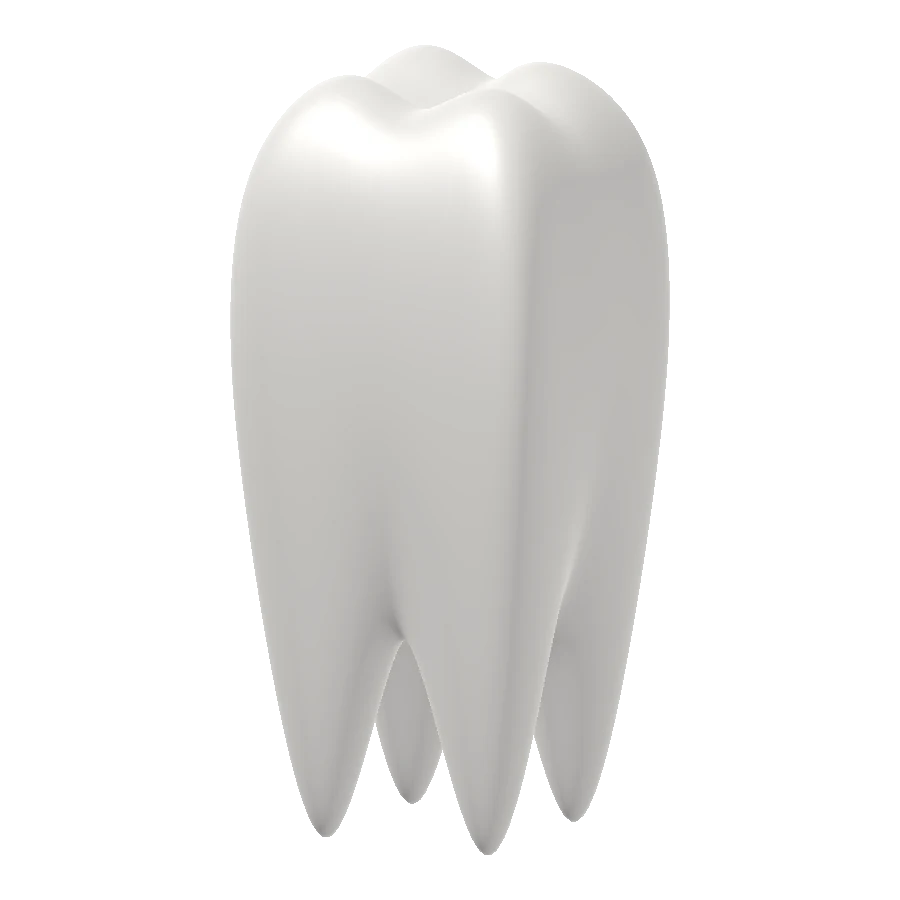
3D model: “Zahn 20230620 001” by PantheraLeo1359531, Wikimedia Commons, CC0 1.0
Illustrative anatomical model of a molar. Your own scan is shown to you on screen at the appointment. Drag to rotate.
What it costs
What conservative treatment costs here
Conservative dentistry is the least expensive work in the clinic and the easiest to quote. It is still quoted per tooth, because that is how decay arrives.
What decides the figure
- How much tooth is missing
- A small filling, a large rebuild in tooth-coloured material and a laboratory-made overlay are three different jobs on what looks like the same tooth.
- Direct or laboratory-made
- Anything a dental technician makes carries laboratory costs and a second appointment.
- The material
- Tooth-coloured, ceramic and gold inlays are priced differently, and they wear differently too.
- Hygiene beforehand
- Scaling and AirFlow are their own appointment, and where gum inflammation is present they come first.
How you get a price
- 01Free consultationThe clinic's personal assessment costs nothing. We look at the tooth, review any imaging your case needs and explain what the options actually involve.
- 02A cost estimate before anything is scheduledYou are quoted for your own mouth, for the materials your case needs and the number of appointments it takes, rather than handed a table average that may not apply to you.
- 03You decide afterwardsThere is no obligation to book treatment after the consultation. If you are comparing clinics, take the estimate home with you.
Most of our patients travel from Austria and Germany. In the clinic's experience, treatment here costs on average 15 to 20 percent less than comparable private care in Austria. Your own figure depends on your treatment plan, and you will have it in writing before anything is booked.
The figures on this page and on the price list are indicative and show what treatment starts from. Your own amount comes from your examination and is given to you in writing before anything is booked. The examination is free.
Conservative treatment, answered
What can I eat after a filling?
A tooth-coloured filling is hard as soon as it is placed, so there is nothing to wait for on that account. What is worth waiting for is the anaesthetic: while your lip and tongue are numb it is easy to bite them without noticing, so leave chewing on that side until the feeling has come back. Some sensitivity to cold for a few days afterwards is normal. If the tooth feels high when you bite once that has settled, come back and it is adjusted in minutes.
Will my filling be visible?
No. Modern white fillings are matched to the natural shade of your tooth so closely that the repair is effectively invisible, and the material is shaped to follow the tooth's own surface rather than approximating it. That shaping is done at magnification, which is why the chewing surface comes back rather than being flattened.
How do I know whether I need a filling or an inlay?
It comes down to how much sound tooth is left. Small cavities and chipped edges are filled in one appointment. Where decay has taken a larger part of the tooth, the laboratory-made version is harder wearing and fits more precisely, and it takes two appointments rather than one. You are told which of the two your tooth needs at the examination, and what each would cost, before you decide anything.
What is a digital impression like?
Quick and uneventful. A small handheld scanner is moved slowly around your teeth while it captures hundreds or thousands of frames, and the computer stitches them into an exact 3D model of your mouth. There is no tray, no impression material setting against your palate, and nothing to gag on. If a section needs redoing, it is rescanned in seconds.
Can a big old filling be repaired without a crown?
Often, yes. The tooth can be built back up in a single appointment with tooth-coloured material, without being ground down for a crown, at a lower cost than a crown or a veneer. Whether that is possible depends on how much sound tooth is left around the old filling, and judging that reliably is exactly what working at magnification is for.
How long does an inlay take?
Two appointments. At the first, the tooth is prepared and scanned, and you leave with it protected. The dental laboratory makes the inlay from that scan, and at the second appointment it is checked against your bite and bonded in place. If you are travelling for treatment, say so when you book and both appointments are planned around the trip.
Worth doing early
Deal with the small thing while it is still small.
A free examination tells you what is actually happening in your mouth. Conservative treatment is always cheaper than what it prevents.
Or call the clinic+36 (99) 50 60 90