
Surgical dentistry
Oral surgery in Sopron: extractions and wisdom teeth
Oral surgery covers the problems that need an operation rather than a filling or a crown: routine and surgical extractions, wisdom teeth, root tip surgery, gum reshaping and rebuilding bone before an implant. Harajda Dent carries out all of it in Sopron, under local anaesthetic, with every case planned from imaging first.
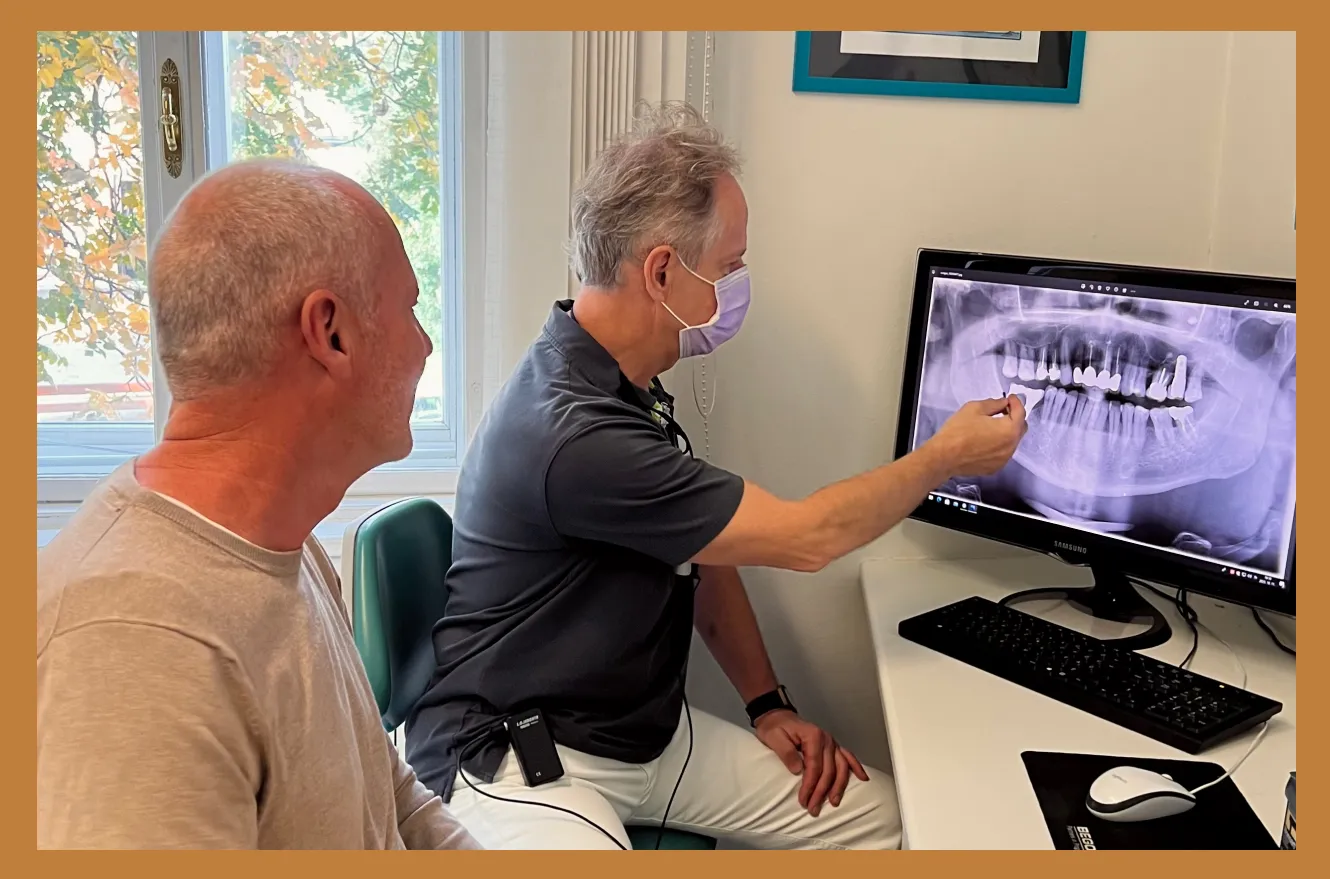
Surgery planned from the imaging, with the patient
- Covers
- Extraction, wisdom teeth
- Method
- Local anaesthetic, imaged first
- Planning
- Panoramic X-ray or 3D CT
- Follow-up
- Sutures out at 7–10 days
- From
- €60
The full surgical spectrum, in one clinic
Harajda Dent handles the full range of oral surgical problems in Sopron, from the smallest procedure to complex operations, with modern diagnostics, up-to-date equipment and experienced specialists.
Extraction and surgical extraction
A tooth comes out when inflammation is so extensive that nothing else will settle it, or when the tooth is so badly decayed or broken that there is too little left to rebuild. Where the tooth can still be saved, root canal treatment is tried first. The extraction itself is carried out under local anaesthetic, completely painlessly, and in most cases the site heals quickly and without complications.
Wisdom tooth removal
Wisdom teeth frequently cause trouble because they do not fit properly in the jaw or erupt at an abnormal angle, producing pain, inflammation, crowding and difficulty chewing. They lost their function in the course of evolution and play no part in chewing, so nothing is lost by removing them.
Root tip surgery, or apicoectomy
An apicoectomy is a small surgical procedure that removes the infected tip of a tooth's root through the gum, together with the inflamed tissue around it, so that the tooth itself can stay where it is. The canal is then sealed from below, which stops infection getting back into the bone. It is done under local anaesthetic, and it saves a tooth that would otherwise have to be taken out. Surgery is not automatically the first move, though. Where a root canal done elsewhere has failed, it can often be redone through the crown first, without any surgery, and in many cases that alone settles the inflammation. Root tip surgery is the right answer when redoing the root canal is not possible, or when it has already been tried and the tooth is still inflamed.
Reshaping the gumline around an implant
A gingivoplasty is a small procedure that reshapes the gumline to create a band of firm, attached gum where the ridge of bone underneath has already shrunk, so that moving muscle cannot press food in around an implant. It is gentle, it is done under local anaesthetic, and it visibly improves the look of the smile.
Rebuilding bone before an implant
An implant needs bone to hold it, and a jaw that has been without a tooth for years, or that inflammation has eaten into, often has too little left. Bone grafting rebuilds it, using either your own bone or an artificial graft material that encourages new bone tissue to form. In the upper back jaw the shortage is usually height rather than width, because the air space above the molars sits low. A sinus lift is a procedure that gently raises the floor of that air space and packs graft material into the room it creates, which over time becomes your own bone. Both are carried out under local anaesthetic, and both make an implant possible in a jaw that could not otherwise take one.
Surgical treatment is usually needed when
- a tooth is broken or so severely decayed that it cannot be restored
- inflammation is too extensive for conservative treatment to resolve it
- a wisdom tooth is impacted, angled or repeatedly inflamed
- a root-treated tooth stays inflamed and redoing the root canal is not possible or has not settled it
- orthodontic treatment requires a tooth to be removed
- there is not enough bone in the jaw to place an implant
The appointment
How a surgical appointment runs
Every surgical procedure here is planned before it is performed. For wisdom teeth in particular, the specialist works out the position of the tooth from a panoramic X-ray, which lays the whole jaw out in a single flat picture, or from a 3D CT scan, which builds a three-dimensional image of the jaw so that the roots, the nerve and the sinus can be seen from every angle rather than flattened into one view.
- 01
Consultation and imaging
The problem is examined and imaged with a panoramic X-ray or a 3D scan, depending on what the case needs, so that the position of the roots, the nerve and the sinus is known before anything is started rather than discovered during it.
- 02
Planning the operation
The specialist plans the procedure from that image: the approach, whether the tooth needs to be divided before it will come out, and whether bone work belongs in the same appointment.
- 03
Local anaesthetic
The site is anaesthetised locally. Everything on this page, from a straightforward extraction to bone work under a future implant, is carried out this way, painlessly.
- 04
The procedure
The planned surgery is carried out and the site closed: the tooth removed, the root tip taken off and the canal sealed from below, the graft placed, or the gum reshaped.
- 05
Closing the site and going home
Sutures are placed where the site needs them, and you are given aftercare instructions before you leave, so you know what to do that evening and over the days that follow.
Implant placement, bone grafting and All-on-4 / All-on-6 restorations are carried out by the same surgical team. The implant page covers what happens after the surgery.
After the surgery
Most of the recovery happens in the first ten days
The operation is the short part. What patients ask about most is the week that follows it, so here is what that week is actually like.
Expect some swelling and tenderness for a few days. That is the tissue responding to surgery rather than a sign that something has gone wrong, and it is why you are given aftercare instructions before you leave the clinic instead of being sent them afterwards. Following them closely through the first day or two is the most useful thing you can do for the site.
You are seen again at around 7 to 10 days. The healing is checked and any sutures are taken out. That review is worth keeping even if everything feels fine by then, because it is how we confirm the site has closed the way it should rather than assuming it has.
Most sites heal quickly and without complications. If something does not feel right in the meantime, phone the clinic rather than waiting for the review appointment. We would far rather hear from you early than late. Once the site has healed, the gap gets planned if a tooth was removed: an implant, a bridge or a denture.
The shape of a normal recovery
- The day itself: the site is closed and you go home with aftercare instructions
- The first few days: swelling and tenderness, which are expected rather than a problem
- The review appointment: the healing is checked and any sutures come out
- Any time in between: a phone call to the clinic if something does not feel right
- Afterwards: the replacement tooth is planned, where one was removed
What it costs
What oral surgery costs here
Surgical work is quoted per procedure after the imaging has been reviewed, because the picture is what tells us how difficult the case actually is.
What decides the figure
- Straightforward or surgical
- Removing a fully erupted tooth and sectioning an impacted, angled wisdom tooth out of the bone are different operations.
- Imaging needed
- A panoramic X-ray is enough for many cases; complex wisdom teeth and implant sites are planned from a 3D CT scan.
- Rebuilding bone
- Grafting, or raising the floor of the air space above the upper back teeth, adds a surgical step and graft material to the plan, and is usually part of an implant case.
- What replaces the tooth
- The extraction itself is rarely the main cost. What goes in the gap afterwards usually is.
How you get a price
- 01Free consultationThe clinic's personal assessment costs nothing. We look at the tooth, review any imaging your case needs and explain what the options actually involve.
- 02A cost estimate before anything is scheduledYou are quoted for your own mouth, for the materials your case needs and the number of appointments it takes, rather than handed a table average that may not apply to you.
- 03You decide afterwardsThere is no obligation to book treatment after the consultation. If you are comparing clinics, take the estimate home with you.
Most of our patients travel from Austria and Germany. In the clinic's experience, treatment here costs on average 15 to 20 percent less than comparable private care in Austria. Your own figure depends on your treatment plan, and you will have it in writing before anything is booked.
The figures on this page and on the price list are indicative and show what treatment starts from. Your own amount comes from your examination and is given to you in writing before anything is booked. The examination is free.
Oral surgery, answered
Does having a tooth out hurt?
The procedure is carried out under local anaesthetic and is completely painless. Everything from a straightforward extraction to wisdom teeth and bone work is done that way. Afterwards there is usually some swelling and tenderness for a few days; in most cases the site heals quickly and without complications, and you leave with aftercare instructions.
Do wisdom teeth always have to come out?
No, only when they cause a problem. They frequently do, because they often do not fit properly in the jaw or erupt at an abnormal angle, which leads to pain, inflammation, crowding and difficulty chewing. Where that is the case, removal is the lasting solution, and because wisdom teeth play no part in chewing, nothing is lost by removing them.
What happens before a wisdom tooth is removed?
The tooth is imaged first. Our specialist assesses its position from a panoramic X-ray or a 3D CT scan and plans the operation from that image, so the angle of the roots and the proximity of the nerve and the sinus are all known before the appointment starts rather than discovered during it.
Is there any way to keep a tooth I have been told needs extracting?
Sometimes, and it is worth asking. Inflammation that cannot be resolved any other way does mean the tooth has to come out, but before that point there is root canal treatment under the operating microscope, which can save teeth that conventional treatment cannot. If the tooth has already been root treated and did not settle, the first thing we assess is whether the root canal can be redone through the crown, without surgery, and in many cases that resolves it. Where it cannot, an apicoectomy removes the infected root tip and seals the canal from below, which keeps the tooth in place and avoids an extraction.
I do not have enough bone for an implant. What are my options?
Bone grafting rebuilds jawbone lost to a missing tooth or to inflammation, using your own bone or an artificial graft material that encourages new bone to form. In the upper back jaw, where the molars sit, the shortage is usually height, because the air space above those teeth sits low; a sinus lift gently raises the floor of that space and fills the room it creates with graft material that becomes your own bone over time. Both are routine, both are done under local anaesthetic, and both make an implant possible where it otherwise would not be.
I am travelling from Austria. How should I plan a surgical appointment?
Tell us when you book. Surgical sites are reviewed and sutures removed at around 7 to 10 days, so that second visit needs a place in the plan. Most patients from Austria and Germany schedule it when the surgery date is set, since Sopron is roughly 70 kilometres from Vienna. Everything can be handled in German, from the first call onwards.
Before you decide
Get the tooth looked at before it decides for you.
We examine the tooth, image it if that is what the case needs, and tell you honestly whether it can be kept or should come out. There is no charge for that assessment.
Or call the clinic+36 (99) 50 60 90