
Everyday care
Dental hygiene, scaling and check-ups
A dental hygiene appointment removes the tartar and plaque that brushing cannot reach, above and below the gum line, and lifts coffee, tea and tobacco staining with AirFlow. It is painless, takes one visit, and is normally paired with a check-up. Most people come every six to twelve months.
The routine half of the clinic
- Covers
- Scaling, AirFlow, check-up
- Method
- Ultrasonic + AirFlow
- Visits
- One appointment
- Interval
- Every 6–12 months
- From
- €80
A clean, and a proper look at everything else
This is the appointment most people should be having and most people put off. It is short, it does not hurt, and it is where problems get caught while they are still small enough to be cheap.
Scaling, which is what removes tartar
Scaling is the removal of hardened plaque, called tartar, from the teeth and from just below the gum line. It is done with an instrument that vibrates the deposit off the tooth, so nothing is cut and it does not hurt. Tartar sits exactly where a brush cannot follow, the gum reacts to it, and taking it away is the treatment for gums that bleed or feel puffy. It is also what stops the bone around your teeth being lost quietly over years.
AirFlow stain removal
A fine spray of water, air and a special powder lifts plaque and discoloration off the tooth surface. It works particularly well on coffee, tea and tobacco marks, and it reaches the grooves and the spaces between teeth that scaling alone leaves behind. Teeth come out smoother, cleaner and brighter, though nothing has been bleached: what you get back is your own shade.
A check-up in the same visit
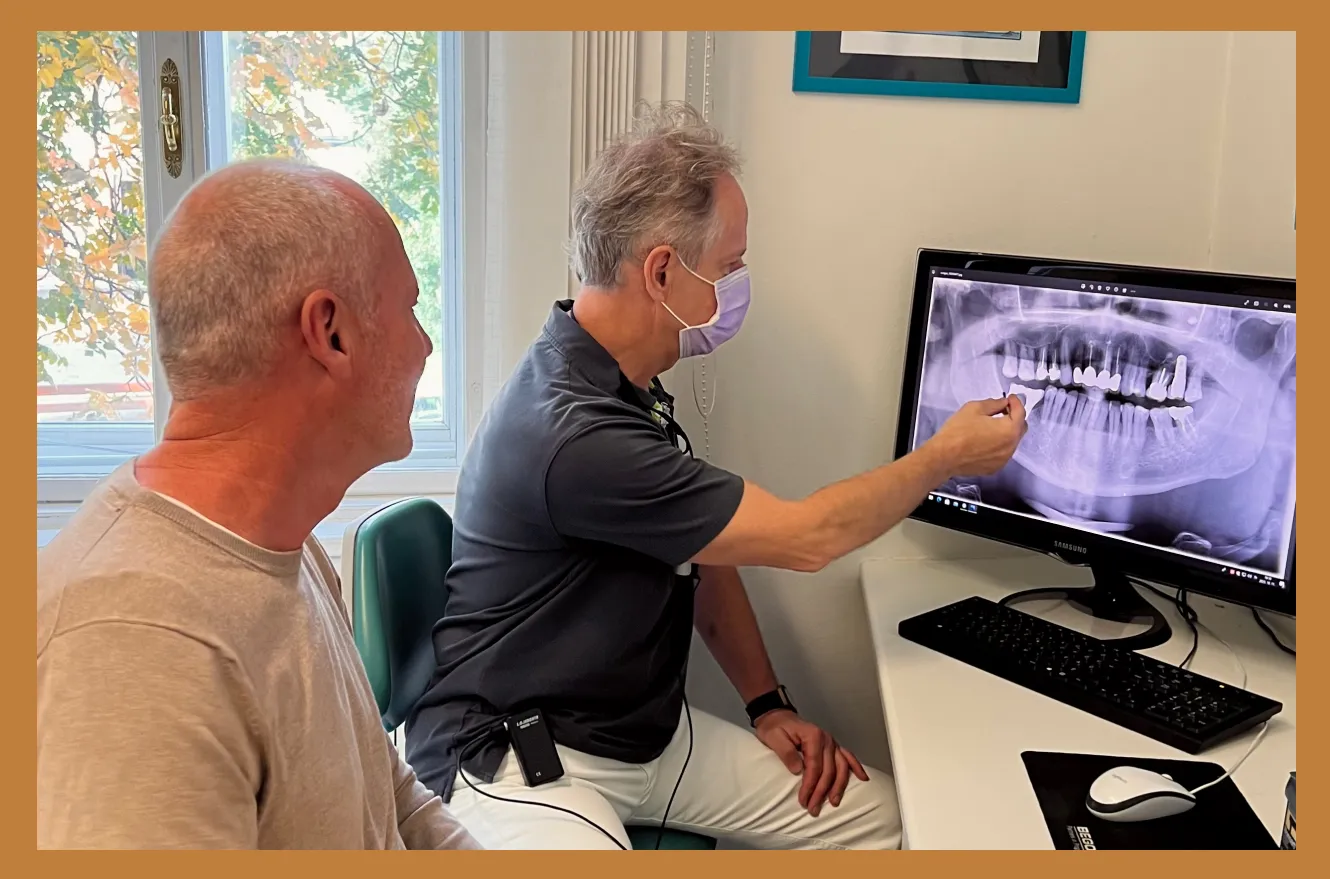
With the surfaces clean, everything is visible: a cracked filling, a cavity starting between two teeth, a crown margin beginning to leak. You are told what we found and what, if anything, needs doing, and you decide when.
Something you can keep up at home
Brushing technique, the gaps you are missing, and how to look after a bridge, an implant or a denture without damaging it. Practical advice, given at the chair, in plain language.
Worth booking a hygiene appointment when
- your gums bleed when you brush or floss
- you can see or feel hard deposits along the gum line
- coffee, tea or tobacco has dulled the colour of your teeth
- your breath is stale in a way brushing does not fix
- you have crowns, bridges, implants or a denture to look after
- you cannot remember your last check-up, which is answer enough
How the appointment runs
What actually happens when you come in
One visit, start to finish. Nothing is drilled and nothing is decided for you: if the check-up finds something, you are told what it is and what it would take to fix, and you choose when.
- 01
We look before we start
Teeth and gums are examined first, so you know what state your mouth is in and we know where the deposits actually are. If you are nervous, say so at this point. Easing that is the clinic's first job, and it is easier to do before the appointment starts than during it.
- 02
Ultrasonic scaling
Tartar and plaque are removed from the tooth surfaces and from below the gum line with an ultrasonic scaler. It is a painless procedure. Gums that are already inflamed can be tender while it is done, and that is a reason to have it seen to sooner.
- 03
AirFlow polishing
The spray of water, air and fine powder goes over the surfaces to lift the staining that scaling alone leaves behind, including in the grooves and between the teeth where a brush skates past.
- 04
The check-up, and when to come back
Now that everything is clean, the teeth, old fillings, crown margins and gums are checked properly. Anything found is explained: what it is, whether it needs treating now or watching, and what it would involve. Before you leave you are given a rhythm to come back on, based on your gums and on what you have in your mouth rather than on a standard number.
Where gum inflammation or heavy tartar is present, hygiene comes before restorative work. Filling a tooth in an inflamed mouth solves the smaller problem and leaves the larger one in place.
Coming back
Every six to twelve months, before anything hurts.
Regular check-ups and hygiene treatment every six to twelve months is the interval the clinic works to, and it is the same advice we give patients who have had implants or crowns done: tartar removal and good oral hygiene are what extend the life of the work.
The habit matters more than the exact number of months. Someone who comes twice a year has small problems found while they are small. Someone who comes when it hurts arrives with a bigger, slower and more expensive appointment ahead of them.
If it has been years since you last sat in a dental chair, you are in ordinary company here, and no lecture is waiting for you. Come in, we will clean what is there and tell you honestly where you stand.
Who needs a shorter interval
- Smokers, and heavy coffee or tea drinkers, usually need shorter intervals
- Implants, crowns and bridges need hygiene appointments to last
- Denture wearers still need the remaining teeth and gums checked
- Anyone with a history of gum disease needs a closer rhythm
- Pregnancy, diabetes and dry mouth all change how quickly deposits form
What it costs
What a hygiene appointment costs here
This is the least expensive appointment in the clinic and the one that saves the most money over time. It is quoted per appointment, and how much there is to remove is what decides it.
What decides the figure
- How much has built up
- A mouth cleaned six months ago and a mouth cleaned six years ago are not the same appointment, and heavy deposits sometimes need a second visit.
- Scaling alone or scaling with AirFlow
- AirFlow is the stain-removal step. Most patients have both, but it is a separate part of the treatment.
- The state of your gums
- Where inflammation has gone further than the gum line, more is involved than a routine clean and you are told that before anything starts.
- What you have in your mouth
- Implants, crown margins, bridges and clasped dentures take longer to clean around properly than natural teeth do.
How you get a price
- 01Free consultationThe clinic's personal assessment costs nothing. We look at the tooth, review any imaging your case needs and explain what the options actually involve.
- 02A cost estimate before anything is scheduledYou are quoted for your own mouth, for the materials your case needs and the number of appointments it takes, rather than handed a table average that may not apply to you.
- 03You decide afterwardsThere is no obligation to book treatment after the consultation. If you are comparing clinics, take the estimate home with you.
Most of our patients travel from Austria and Germany. In the clinic's experience, treatment here costs on average 15 to 20 percent less than comparable private care in Austria. Your own figure depends on your treatment plan, and you will have it in writing before anything is booked.
The figures on this page and on the price list are indicative and show what treatment starts from. Your own amount comes from your examination and is given to you in writing before anything is booked. The examination is free.
Hygiene appointments, answered
Does scaling hurt?
No. Tartar and plaque are broken off the tooth surface and removed from below the gum line, and nothing is cut, so there is nothing to numb. Gums that are already inflamed can feel tender while it is done, and that tenderness settles once the deposit causing it is gone. Plaque hardens into tartar within days in places a brush cannot reach, which is why brushing well at home does not make this appointment unnecessary. Tell us if you are anxious or if your teeth are sensitive, and we work more slowly.
Will my teeth be whiter afterwards?
They will look lighter, though nothing has been bleached. Scaling helps teeth keep their natural whiteness and AirFlow lifts coffee, tea and tobacco staining off the surface, so what you see is your own shade with the discoloration taken off it, which for most people is lighter than they expected. If you want to go lighter than your natural colour, that is a different treatment and we will say so honestly.
How often should I come?
Every six to twelve months suits most people, and that is the interval we recommend to patients who have had implants or other work done, since tartar removal and good oral hygiene are what make the work last. Smokers, heavy coffee drinkers and anyone with a history of gum disease usually need shorter intervals. You are given your own number at the appointment.
My gums bleed. Should I wait until they stop?
No. Bleeding gums are usually the reason to come in. The gum is reacting to deposits sitting against it, and it settles once those are removed. Waiting lets the inflammation work its way further down, and the bone lost that way does not come back.
Can my family come at the same time?
We treat patients and their families and are glad to arrange appointments together where it makes the trip easier. Call the clinic and we will fit them into the same morning or afternoon where the diary allows.
Low stakes, high value
Start with a clean and a look.
If it has been a while, this is the easiest appointment to walk back in with. Nothing is drilled, nothing is decided on the spot, and you leave knowing where you stand.
Or call the clinic+36 (99) 50 60 90